March 6, 2026
What It Takes to Build Agentic Workflows
A practical guide to integrating AI into real business workflows

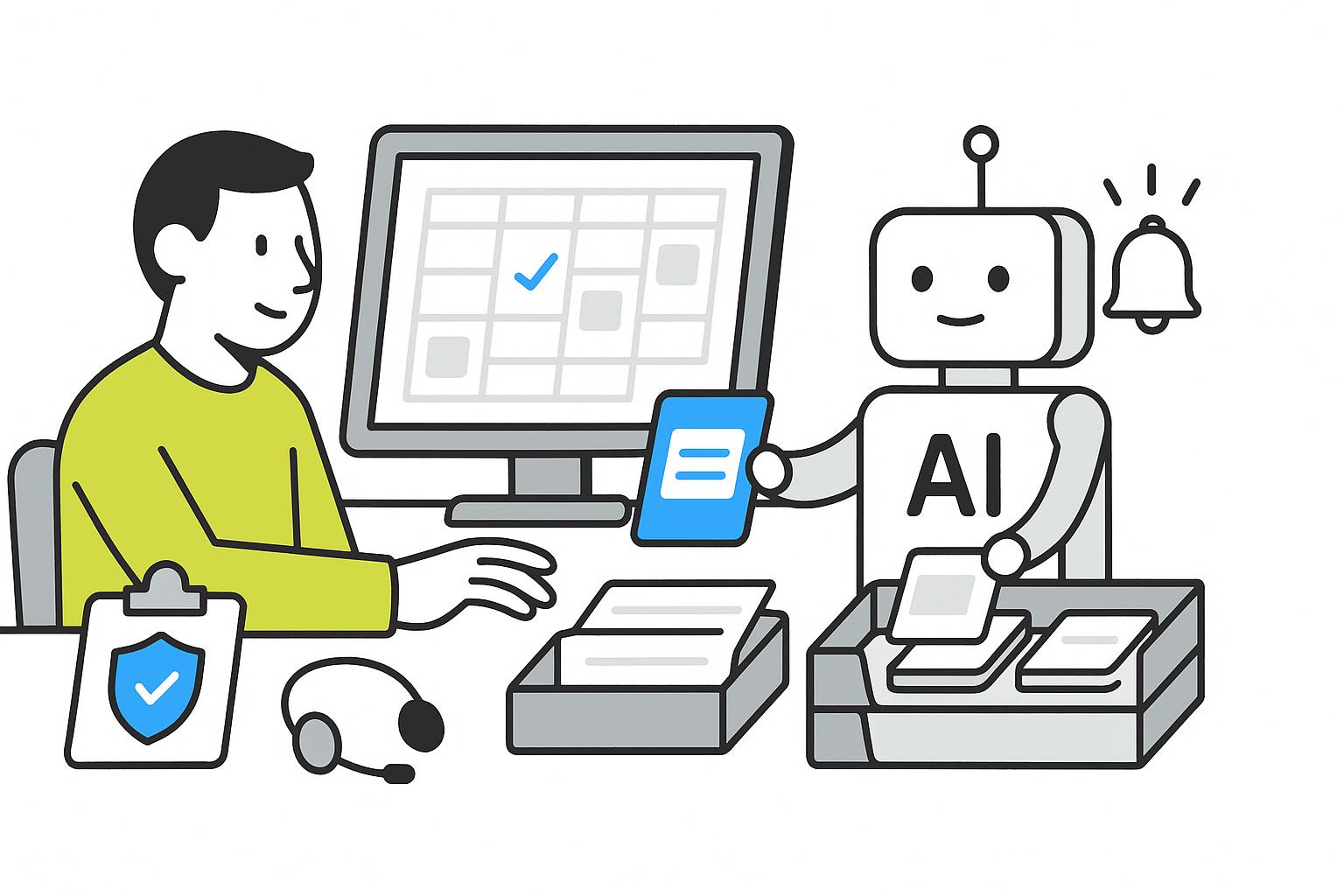
A services company we worked with had a simple problem.
They were good at generating leads.
One staff member knew the system inside out. They understood how to source, qualify, and move prospects toward recruiting conversations. They also knew how to keep warm leads engaged — the ones who weren’t ready to close this month, but might be in three or six.
The issue wasn’t knowledge.
It was volume.
As inbound increased, two things happened:
The team understood their process. What they didn’t have was the capacity to execute it consistently at scale.
They didn’t need “AI.”
They needed leverage inside a workflow they already knew worked.
Before we touched any tooling, we sat down and mapped how their recruiting flow actually ran.
Not the aspirational version.
The real one.
Only once that was clear could we identify where an agent could plug in without disrupting the system.
That distinction matters.
We weren’t redesigning their process.
We were identifying contained areas where automation could assist without removing human oversight where it still mattered.
The solution wasn’t a chatbot.
It was an agentic workflow.
We built a system that:
Initially, every output was reviewed.
We monitored tone, response quality, categorization accuracy, and escalation triggers.
Only after performance stabilized did we progressively reduce oversight — first auto-handling low-risk interactions, then escalating only anomalies.
At no point did the agent operate outside guardrails.
The result wasn’t “AI magic.”
It was consistent execution of a process the brokerage already believed in.
This services company example isn’t unique. The pattern shows up in recruiting, sales development, intake, onboarding, and client communication across service businesses.
If you’re thinking about building something similar internally, here’s the process we follow.
Before talking about agents:
If the workflow isn’t clear, automation will amplify ambiguity.
Look for work that is:
Avoid areas that depend heavily on tacit judgment or ambiguous inputs.
The goal isn’t to automate everything.
It’s to support the parts that create bottlenecks.
This is where most teams underestimate the work.
You need to specify:
Without this layer, you don’t have a workflow. You have exposure.
Agents don’t live in isolation.
They must:
This is often where internal builds stall. It’s not about prompts. It’s about integration discipline.
Start narrow.
Measure accuracy, escalation frequency, and downstream impact.
Treat this as a learning phase.
Move deliberately:
Autonomy should be earned, not assumed.
Most service businesses already understand their operating model.
What they lack is experience translating that model into agentic workflows that:
Building that capability requires more than tooling fluency.
It requires disciplined process mapping, integration design, and governance thinking.
When those pieces are in place, AI doesn’t replace your system.
It reinforces it.
Our latest news and trending topics


.jpeg)