March 23, 2026
Signal Mining, Not Sequences
AI doesn’t send more emails - it surfaces what your best operators would notice, at scale.


Most service businesses don’t have a lead problem. They have a “we already know these people” problem.
You’ve got years of client history sitting in inboxes, project tools, call notes, proposals, support threads, and half-updated CRMs. And yet expansion, reactivation, referrals, and testimonials still happen inconsistently—usually when a good account manager remembers, or when a client happens to ask.
That approach worked when new business was cheaper and the team had slack. It’s not working now. Acquisition costs are up, pipeline is less predictable, and operators are expected to do more with fewer people.
The mistake I keep seeing is treating this as an “automation” problem. Teams try to fix it with better drip campaigns, stricter CRM hygiene, and more lifecycle stages.
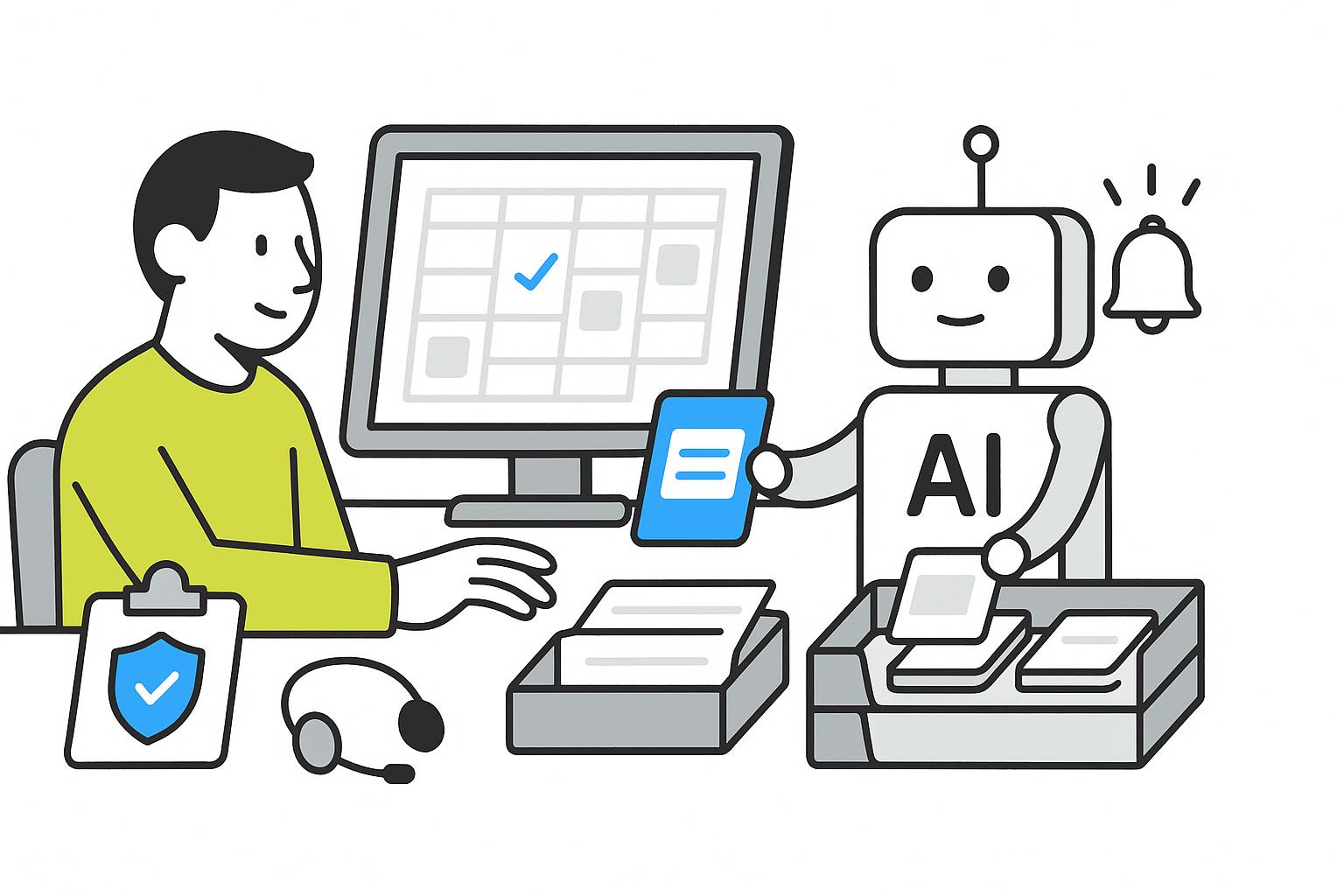
The real shift is different: from predefined sequences to dynamic signal detection. AI isn’t here to send more emails. It’s here to notice what your best people would notice—if they had perfect memory and infinite time.
Traditional expansion mechanics are built on a neat model of reality: clients move through stages, data is structured, and needs are predictable enough to map to sequences.
In service businesses, none of that is reliably true.
When you force this reality into rigid stages and scheduled follow-ups, you get predictable outcomes: generic outreach, poorly timed check-ins, and missed opportunities that were obvious in hindsight.
The business cost shows up as lower LTV, uneven expansion revenue, and founders staying involved in accounts longer than they should because “only I know what’s really going on.”
Campaign thinking starts with an outbound constraint: “Who should we email this month?” You segment, schedule, and hope the right message hits the right person at the right time.
Signal-driven workflows start with a different question: “Where is there something worth doing right now?”
This is closer to how experienced operators actually manage accounts. They don’t run sequences. They notice things.
AI’s role here is not to replace judgment. It’s to scan more surface area than humans can, then point your team toward the highest-leverage conversations.
The system becomes a layer that continuously watches for signals across messy context, instead of a tool that executes a calendar you invented three months ago.
Most service leaders underestimate what’s possible with unstructured data because they’re used to CRMs that only “understand” fields: industry, stage, last touch, and a few tags.
AI can ingest and reason across unstructured inputs—within guardrails—so long as you’re clear about goals and you have enough historical material to learn your patterns.
1) Identify opportunities by reading full context
Instead of relying on “last contacted 90+ days” or “contract ending soon,” AI can look for real commercial moments embedded in history:
2) Produce prioritized worklists, not broad campaigns
Operators don’t need more ideas. They need a short, defensible list of what to do next week.
Priority matters because attention is the constraint. The goal is not “touch everyone.” The goal is to focus human effort where it pays back.
3) Draft outreach that is grounded, not templated
Good account outreach is specific. It references real work, real outcomes, real open loops. AI can draft messages that pull relevant details from history, then match your tone and guardrails.
The difference is subtle but material:
That kind of message doesn’t feel like “nurture.” It feels like attention.
4) Optional autonomous execution (with real constraints)
Some teams will keep humans in the loop. Others will allow AI to send certain classes of outreach automatically (for example, testimonial requests after a closed project, or reactivation pings for low-risk segments).
The constraint here is not technical. It’s trust, compliance, and brand risk. Service businesses live on reputation. A few poorly timed or tone-deaf messages can cost more than the system earns.
A practical path is staged autonomy: draft first, then human review, then limited auto-send for narrow use cases.
AI can create operating leverage, but it will amplify whatever system you already have. If your account ownership is unclear, your data permissions are a mess, and nobody is accountable for follow-through, you’ll just get faster confusion.
Leaders need to make a few decisions upfront.
1) Decide what “an opportunity” means in your business
If you can’t define value, AI will surface noise. You need a small set of opportunity types tied to your actual revenue model.
2) Name an owner for the system’s outputs
AI can generate a prioritized list. It cannot make someone care. Someone needs to own:
If nobody owns that loop, it becomes another dashboard people ignore.
3) Set guardrails for tone, timing, and escalation
Contextual outreach is powerful, but service relationships are delicate. Guardrails prevent “clever automation” from creating awkward moments.
4) Accept that your data will be imperfect—and design for it
Many founders wait for a CRM cleanup that never comes. Signal mining works because it tolerates mess, but you still need basic hygiene:
The goal isn’t perfect data. It’s usable context.
When expansion and reactivation are driven by signals, a few second-order effects show up quickly.
This is also where investors pay attention. A service business with reliable expansion mechanics is less dependent on net-new acquisition. That’s a structural advantage, not a motivational one.
Good businesses are designed. Great ones are engineered. Signal-driven workflows are an engineering move.
The core takeaway is simple: stop trying to force relationship-driven revenue into lifecycle checkboxes and drip sequences.
Instead, treat your historical client data like an asset. Use AI to continuously mine it for context-specific signals, then operationalize those signals into accountable worklists and grounded outreach.
If you’re considering this shift, start small: pick one opportunity type (reactivation, upsell, churn risk), one data source (email or call transcripts), and one owner. Run it for 30 days and compare results to your usual “nurture” motion.
If you want, share what your current expansion workflow looks like and where the data lives. I’m happy to pressure-test whether signal mining would actually change outcomes in your case.
Our latest news and trending topics

.jpeg)